
Detecting Hidden Pipe Leaks: A Complete Guide to Water Leak Detectors for Buildings & Industry
Understand the types, working principles, and the importance of early detection to prevent property damage.
Water leak detectors are often called the “silent killer” of building structures and industrial facilities. In many cases, water seepage remains invisible at the surface until it triggers major issues: structural decay, flooded floors, electrical hazards, and uncontrolled spikes in water bills.
This is where the Water Leak Detector plays a crucial role. By leveraging this technology, inspection processes no longer rely on destructive, random guesswork. This article provides a comprehensive look at how water leak detectors work, their key technologies, and answers to frequently asked questions.
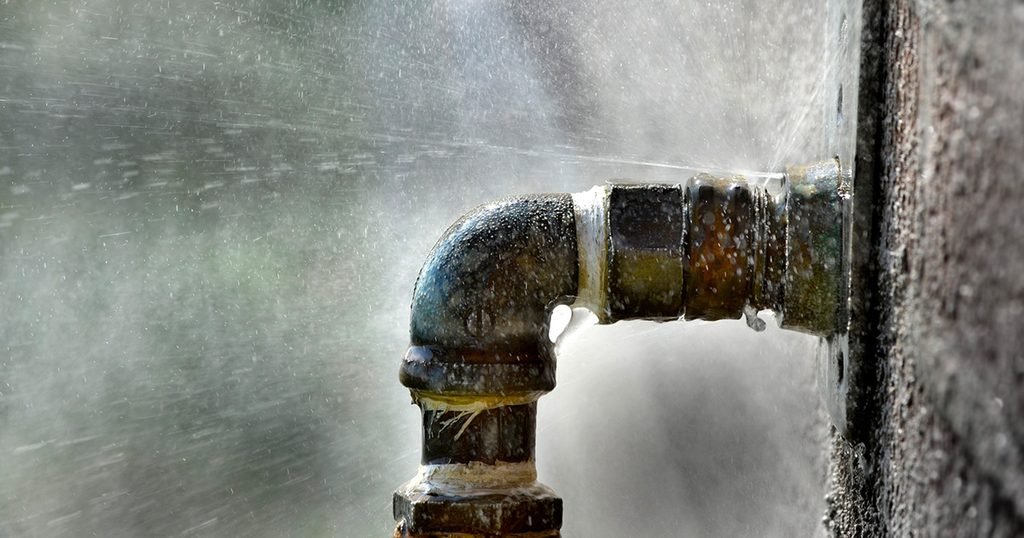
Table of Contents
Why Is Early Water Leak Detection So Critical?
Without the right detection equipment, leaks are usually only addressed after the damage becomes visually obvious. Implementing early detection offers several key advantages:
- Protects Assets & Property: Guards critical infrastructure—such as data centers, laboratories, document archives, and manufacturing plants—from electrical short circuits and high humidity risks.
- Non-Destructive Testing (NDT): Enables technicians to pinpoint the exact location of a hidden leak inside walls or under concrete slabs without invasive demolition.
- Operational Cost Efficiency: Minimizes water waste and prevents costly, large-scale structural repairs.
Types of Water Leak Detectors and How They Work
Different environments and piping networks require distinct technological approaches. Here are the main categories of water leak detectors used in commercial and industrial settings:
Acoustic Water Leak Detector
- How It Works: High-pressure water escaping through a small pipe crack creates specific sound frequencies and vibrations. This device uses a highly sensitive ground microphone to capture these acoustic waves, amplifying them through headphones or visual frequency displays.
- Best Used For: Locating underground pipe leaks, concealed wall pipes, or building utility networks.
Leak Noise Correlator
- How It Works: Multiple sound sensors are attached to accessible points along the pipe (such as valves or hydrants). The system calculates the exact time difference it takes for the leak noise to reach each sensor, mathematically determining the precise coordinates of the leak.
- Best Used For: Extensive commercial distribution networks, industrial parks, and municipal water mains.
Conductivity / Sensing Cable Detectors (Spot & Cable Detectors)
- How It Works: Leverages the electrical conductivity of water. When liquid bridges the gap between two sensor probes or contacts a specialized sensing cable, it completes an electrical circuit and triggers an alarm.
- Best Used For: Permanent installation in static, high-risk areas like server room raised floors, near HVAC/chiller units, or under equipment sinks.
Smart Flow & Pressure Sensors
- How It Works: Installed directly into the main supply line to continuously monitor water flow rates and pressure. If the system detects an unexpected pressure drop or continuous abnormal flow, it triggers an alarm and can activate an automatic shut-off valve.
- Best Used For: Complete water management systems in high-rise buildings, factories, and smart homes.
Thermal Imaging Camera
- How It Works: Detects infrared radiation differences. Areas with hidden water seepage or moisture retention typically exhibit lower temperatures (cooler spots) compared to surrounding dry structures.
- Best Used For: Mapping moisture patterns behind walls, above ceilings, or within radiant floor heating networks.
Frequently Asked Questions (FAQ)
Q: Can acoustic water leak detectors filter out surrounding background noise?
A: Yes. Professional acoustic detectors feature frequency filters that allow technicians to isolate the specific sound range of escaping water while dampening external ambient noises like traffic or machinery.
Q: Does the pipe material (PVC, Iron, HDPE) affect detection accuracy?
A: Significantly. Metallic pipes (cast iron, galvanized steel, copper) transmit leak sounds much farther and clearer than plastic pipes (PVC or HDPE), which tend to absorb acoustic vibrations. For non-metallic pipes, technicians typically rely on lower-frequency acoustic sensors or thermal imaging.
Q: Can these detection systems integrate into a Building Management System (BMS)?
A: Absolutely. Most modern sensors offer relay outputs or IoT protocols (such as Wi-Fi, Modbus, or LoRaWAN) allowing direct integration into central BMS panels or instant mobile alert systems.
Conclusion
Investing in a water leak detector is not just about purchasing measuring tools—it is a proactive step toward protecting long-term property value. By choosing the right technology—ranging from acoustic detection to smart IoT monitoring—you can resolve leaks swiftly, accurately, and without costly structural damage.